
If you have an unused paddock, orchard, field or large garden, a shepherd hut can be a brilliant way to create additional income from your land while offering guests something very different from a conventional holiday cottage.
But there is more to creating a successful shepherd hut Airbnb than simply buying a hut and listing it online. Planning, access, utilities, costs, guest experience and the setting itself all need careful consideration.
At Timeless Spaces, we handcraft shepherd huts in our Cornish workshop for holiday lets, glamping businesses, private retreats and homes. Our huts are designed for year-round use and can include bathrooms, kitchenettes, heating and bespoke interiors.
Explore the Timeless Spaces Shepherd Hut range
Here are some of the key things to consider before getting started.
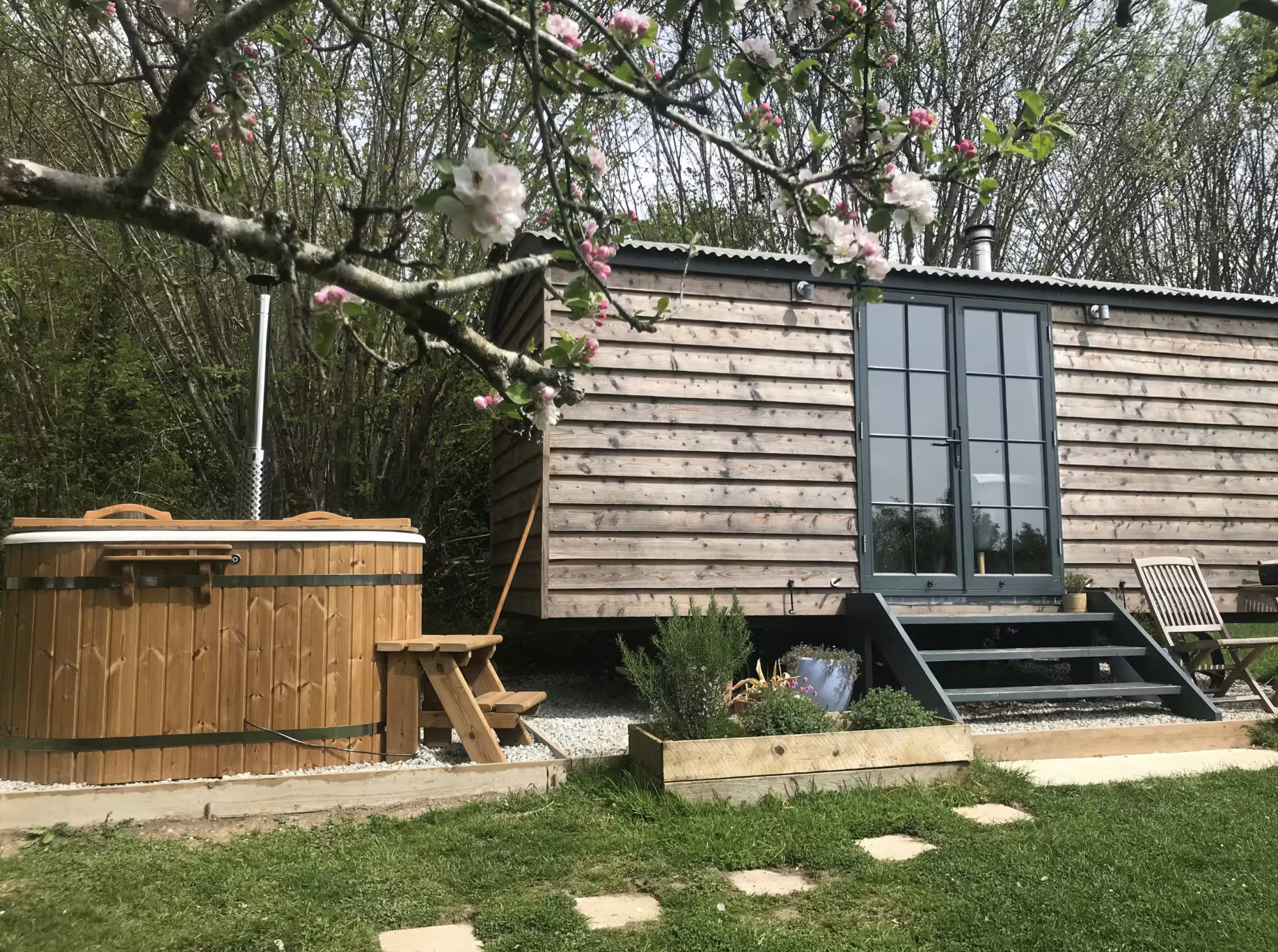
Trebeighan Orchard
1. Start With Your Land
Before deciding which shepherd hut to buy, decide where it will go. The setting can have an enormous impact on the success of a holiday let. Guests aren't simply looking for somewhere to sleep; they're looking for an experience. A sea or countryside view, woodland setting, orchard, secluded garden or proximity to beaches and walking routes can all make your accommodation more appealing. Privacy is particularly important.
Think practically too. Where will guests park? How will they reach the hut? Can the hut be delivered to the site? Where will electricity and water come from, and how will wastewater be managed? And don't forget the view from inside. Something as simple as positioning the bed to look out over the landscape can completely change the guest experience.
2. Understand Planning & Licensing
Planning is one of the most important things to investigate before ordering a shepherd hut. Having wheels does not automatically mean a shepherd hut can be used as holiday accommodation without planning permission.
Current Government guidance states that the local planning authority will determine whether planning permission is required based on the proposed short-term letting use and its potential impact on the surrounding area.
GOV.UK – Letting out a self-catering holiday home in England
There are, however, different routes that may apply depending on your land and proposed business.
Camping & Caravan Exemptions
Certain recreational organisations can operate sites under exemption certificates without the normal site licence or planning permission, subject to specific conditions. This can include Certificated Location or "5CL" sites, which are commonly associated with organisations such as the Caravan and Motorhome Club and Camping and Caravanning Club.
GOV.UK – Camping and caravanning site exemption certificates
These exemptions have specific conditions and shouldn't be interpreted as simply allowing five shepherd huts to be placed on any field and advertised as holiday accommodation.
There are also exemptions for certain temporary uses. For example, Government guidance states that a site licence isn't required for up to three caravans on land of at least five acres for no more than 28 days in any 12-month period.
Importantly, planning permission and caravan site licensing are separate matters, so always establish exactly what applies to your site.
At Timeless Spaces, we can help customers understand the practical questions to ask at the beginning of a project, and we have an in-house planning adviser who can assist with the early stages.
Read our guide: Understanding Planning to Add a Shepherd Hut to Your Land
3. Decide What You're Creating
Think beyond the hut itself. What experience do you want to offer?
You might create one beautiful, private shepherd hut for two, a collection of huts as part of a glamping business, or add accommodation to an existing farm, wedding venue, campsite or rural business.
Your location could also inspire the concept:
Coastal or surf retreat
Romantic countryside escape
Walking holiday base
Wellness retreat
Farm stay
The most successful projects give guests a reason to choose that particular place, rather than simply somewhere to stay.
4. Work Out the Real Costs
Before investing, build a realistic picture of both potential income and costs. Don't simply multiply a high-season nightly rate by 365. Consider different occupancy scenarios and research comparable accommodation in your area. Then factor in costs such as cleaning, laundry, electricity, water, heating, insurance, maintenance, booking platform fees, waste collection, marketing and accounting.
You also need to budget for the site itself. Depending on the location, you may need groundworks, electricity, water, drainage, parking, access improvements, paths, decking and landscaping. We can also help with this part, as our parent company Timeless Construction have all this experience and work with us to prepare the ground works for our customers if they need it.
A hut beside your home with services nearby will be very different from installing one in a remote field.
There are also tax and business-rate considerations. In England, specific criteria determine when self-catering holiday accommodation is assessed for business rates, and the Furnished Holiday Let tax regime was abolished from April 2025.
GOV.UK – Business rates for self-catering and holiday let accommodation
GOV.UK – Rules and regulations for self-catering holiday homes
5. Design Around Your Guests… and Every Season
A shepherd hut stay should feel like a destination in its own right.
Comfortable sleeping accommodation, heating, good lighting, storage, somewhere to prepare food and a well-designed bathroom can all contribute to the experience.
You can then consider the extras that make sense for your particular guests, such as a woodburner, private decking, outdoor dining area, a fire pit, outdoor kitchen, shower, hot tub or sauna.
But more isn't always better. A beautifully designed hut with a strong connection to its surroundings can be far more memorable than one filled with unnecessary features.
Think about winter as well as summer. If you're hoping to generate bookings throughout the year - a wood burning stove and good insulation are essential. At Timeless Spaces, our shepherd huts are fully insulated and layouts and interiors can be tailored for you and their intended use.
6. Make the Most of the Setting
The space outside your hut can be every bit as important as the interior.
A simple path leading to a private deck, comfortable chairs positioned towards the view, thoughtful planting and somewhere to enjoy breakfast or watch the sunset can transform the experience.
Connect your accommodation to its location too. A coastal stay could offer surfboard storage and an outdoor shower; a walking retreat could provide boot storage and local maps; a farm stay might incorporate local produce and the story of the land.
When it comes to marketing, photograph the experience rather than just the building. A beautiful photograph of a shepherd hut is appealing. A photograph of someone sitting outside it with a coffee, looking across an incredible landscape, tells the guest how staying there might feel.
Explore Timeless Spaces projects and Shepherd Hut inspiration
7. Don't Forget Safety & Insurance
If people are paying to stay in your shepherd hut, you have responsibilities as an accommodation provider.
Government guidance for self-catering holiday accommodation covers areas including fire, gas and carbon monoxide safety, electrical safety, insurance and other regulatory requirements.
GOV.UK – Letting out a self-catering holiday home in England
You should also speak to an insurer about appropriate holiday-let insurance and explain exactly how your hut and any additional facilities will be used.
Don't assume standard household insurance will automatically cover commercial holiday accommodation.
8. Start Small and Learn
If you're new to hospitality, there can be real value in starting with one shepherd hut. It gives you time to understand demand, seasonal occupancy, running costs, cleaning and maintenance, as well as what your guests value most. You can then decide whether expanding to two, three or more units makes sense.
We've worked with customers who have done exactly this. Trebeighan Orchard, for example, created a rural Airbnb experience around a Timeless Lowen Shepherd Hut, while The Idle Hour was designed to make the most of its beautiful coastal setting and ocean views.
Both demonstrate the same principle:
The hut is only part of the experience.
The location, landscaping, design, hospitality and thoughtful details are what turn it into somewhere guests remember.
Is a Shepherd Hut Airbnb a Good Investment?
It certainly can be, but every project is different. Success will depend on your location, planning position, infrastructure costs, nightly rate, occupancy, running costs, competition and, importantly, the experience you create. The strongest projects tend to combine three things: a great location, a beautiful place to stay and a compelling reason to visit.
That's why it's worth thinking of your shepherd hut as more than a building. It's the centrepiece of the experience you're creating.
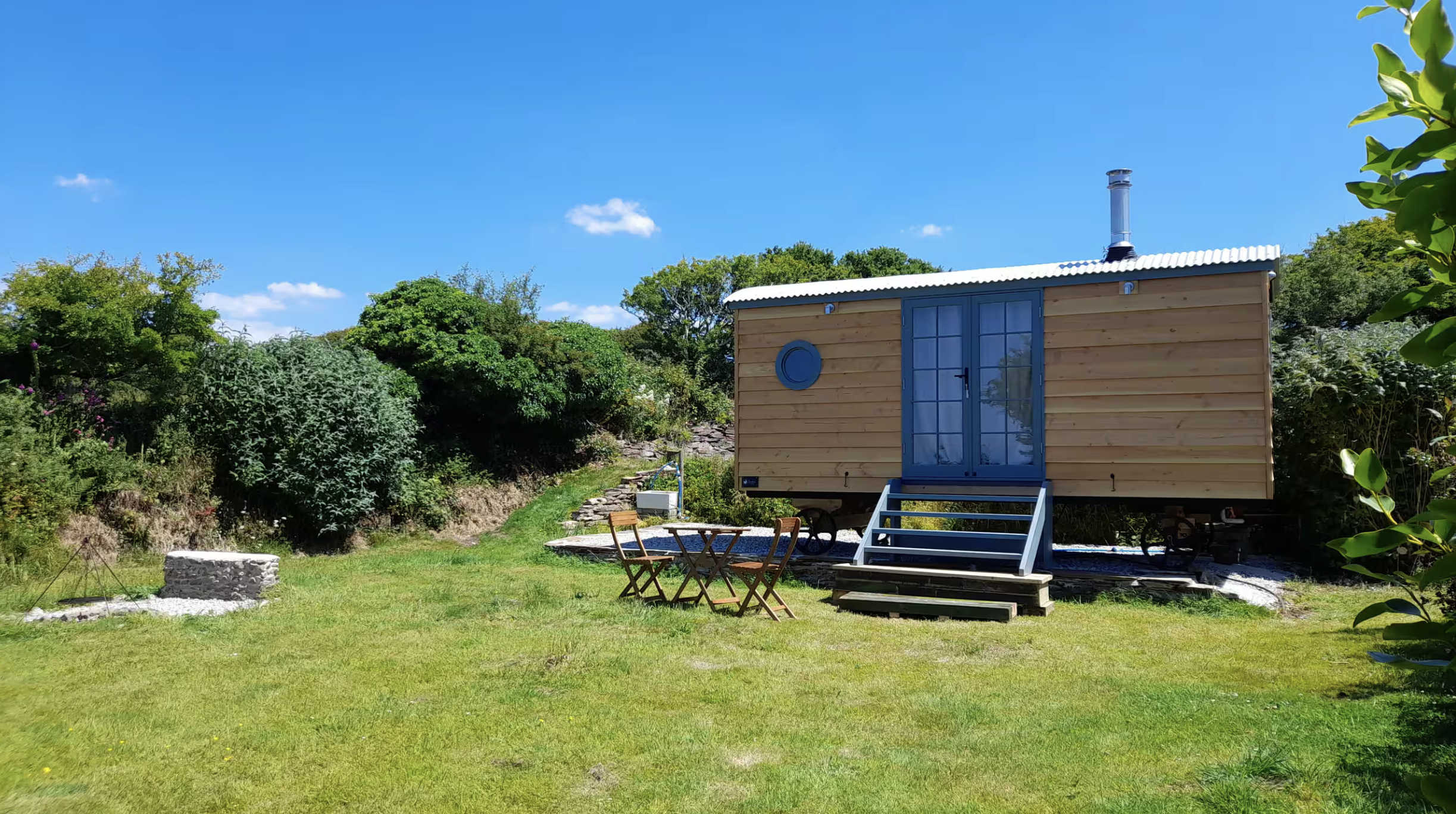
The Idle Hour - Tintagel
Thinking About Starting Your Own Shepherd Hut Airbnb?
If you have a piece of land and are considering creating holiday accommodation, we'd love to hear about your ideas.
Our shepherd huts are handcrafted in our North Cornwall workshop, designed for year-round use and can be configured for Airbnb, glamping, holiday accommodation and private retreats.
We can help you think through the design, specification and practical considerations from the early stages of your project.
Have land and an idea? Start the conversation with our team and let's explore what's possible.